
Restoring a Landmark
A Community Story of Stewardship, Collaboration, and Cultural Legacy
The Orillia Museum of Art & History (OMAH) serves as a vital cultural hub and steward of the historic Sir Samuel Steele Memorial Building—a landmark that reflects the shared history, creativity, and civic spirit of the Orillia community.
A Landmark in the Heart of Orillia
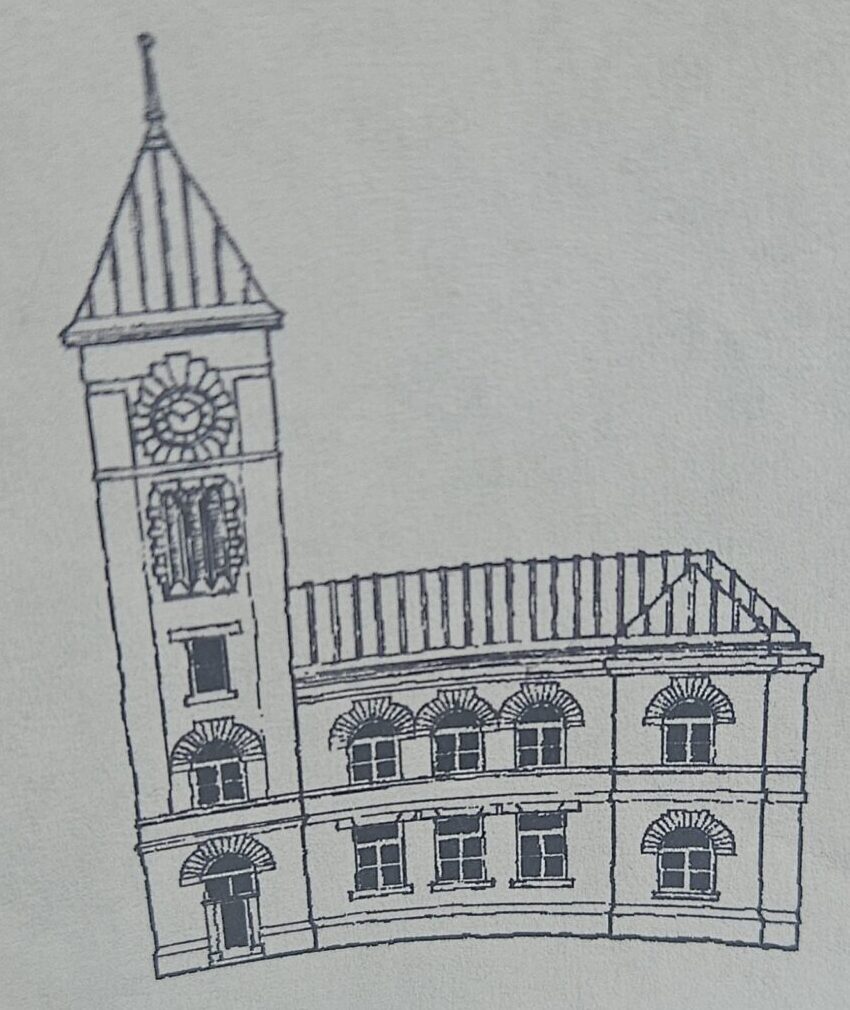
Constructed between 1892 and 1894 as Orillia’s federal post office and customs house, the Sir Samuel Steele Memorial Building is one of the city’s most significant historic landmarks. Designed by Dominion Architect Thomas Fuller in the Richardsonian Romanesque style using locally quarried Longford limestone, the building reflected the civic pride and growth of late nineteenth-century Orillia.
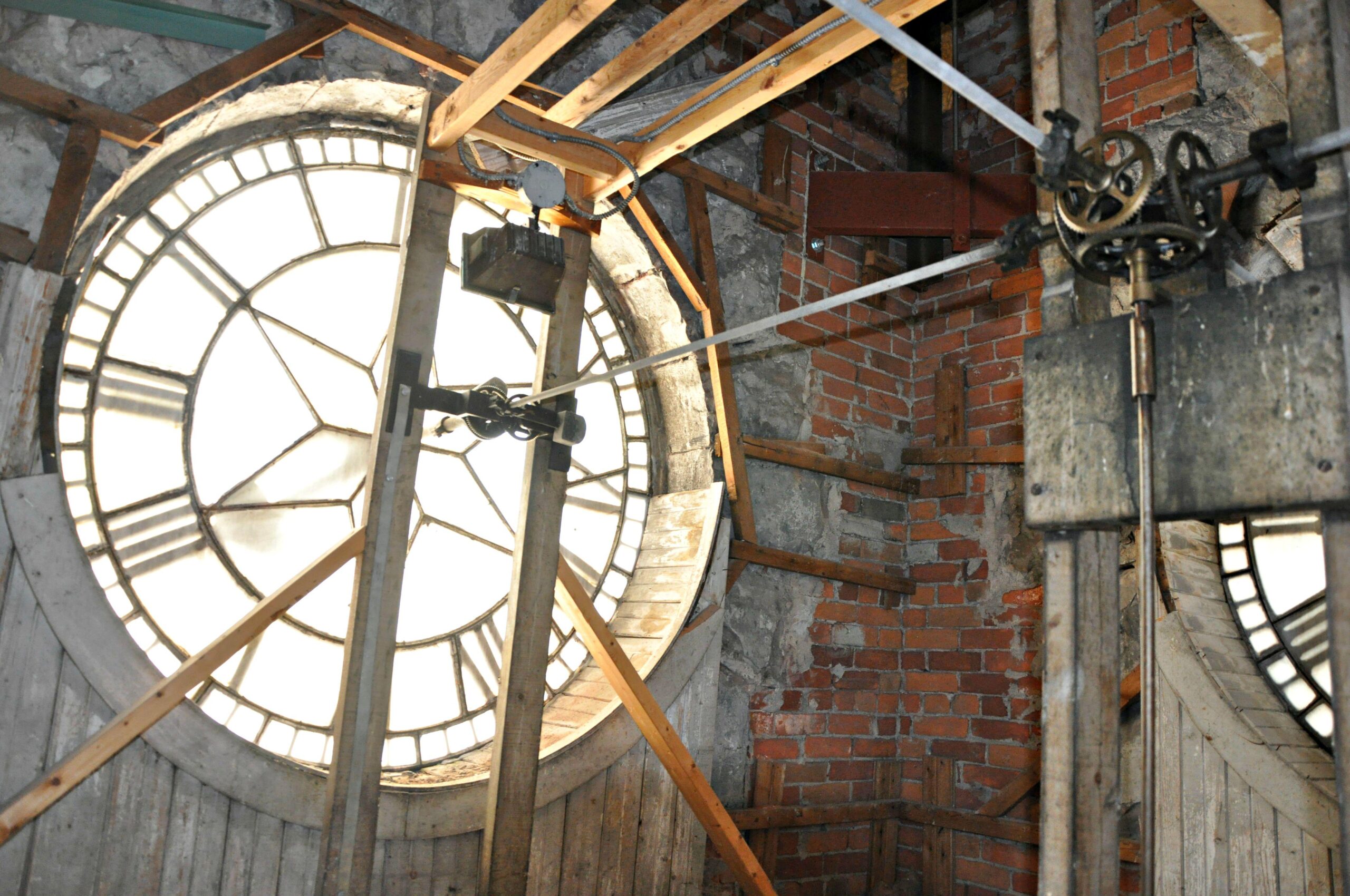
Expanded and substantially rebuilt between 1914 and 1916 to accommodate the town’s growing needs, the building gained its iconic 70-foot clock tower and mansard roof. Following the relocation of the post office in 1956, the building served as the Orillia Police Station and courthouse until 1977 before becoming home to community organizations.
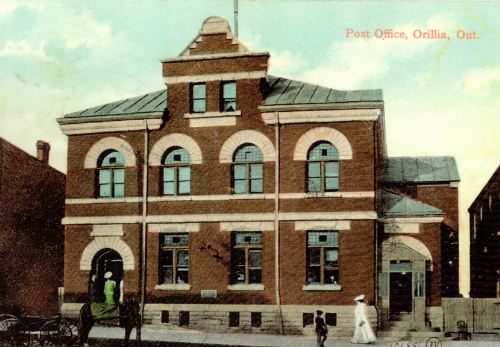
1892–1894
Original construction as the federal post office and customs house.
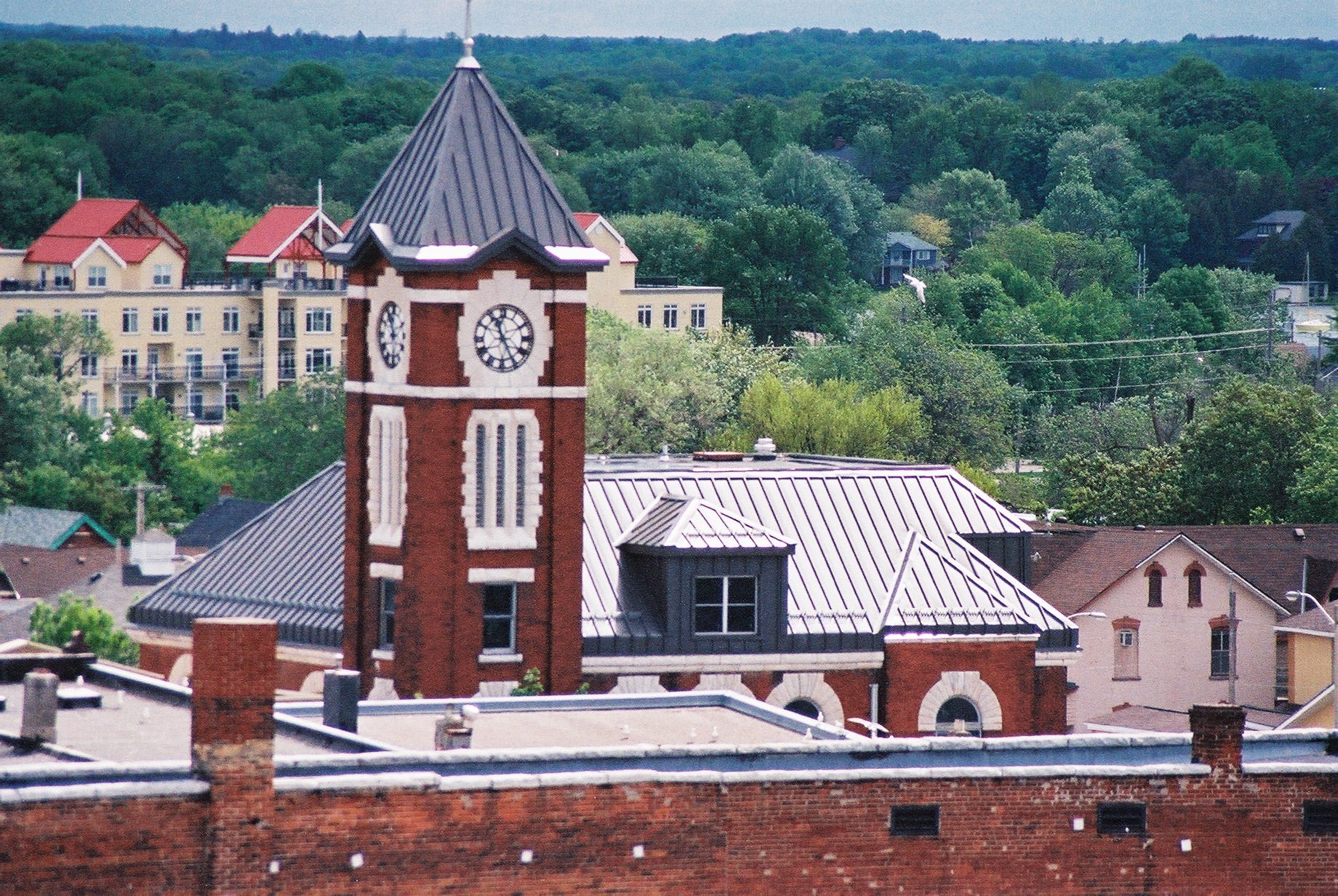
1914–1916
Expanded and rebuilt. The 70-foot clock tower and mansard roof are added.
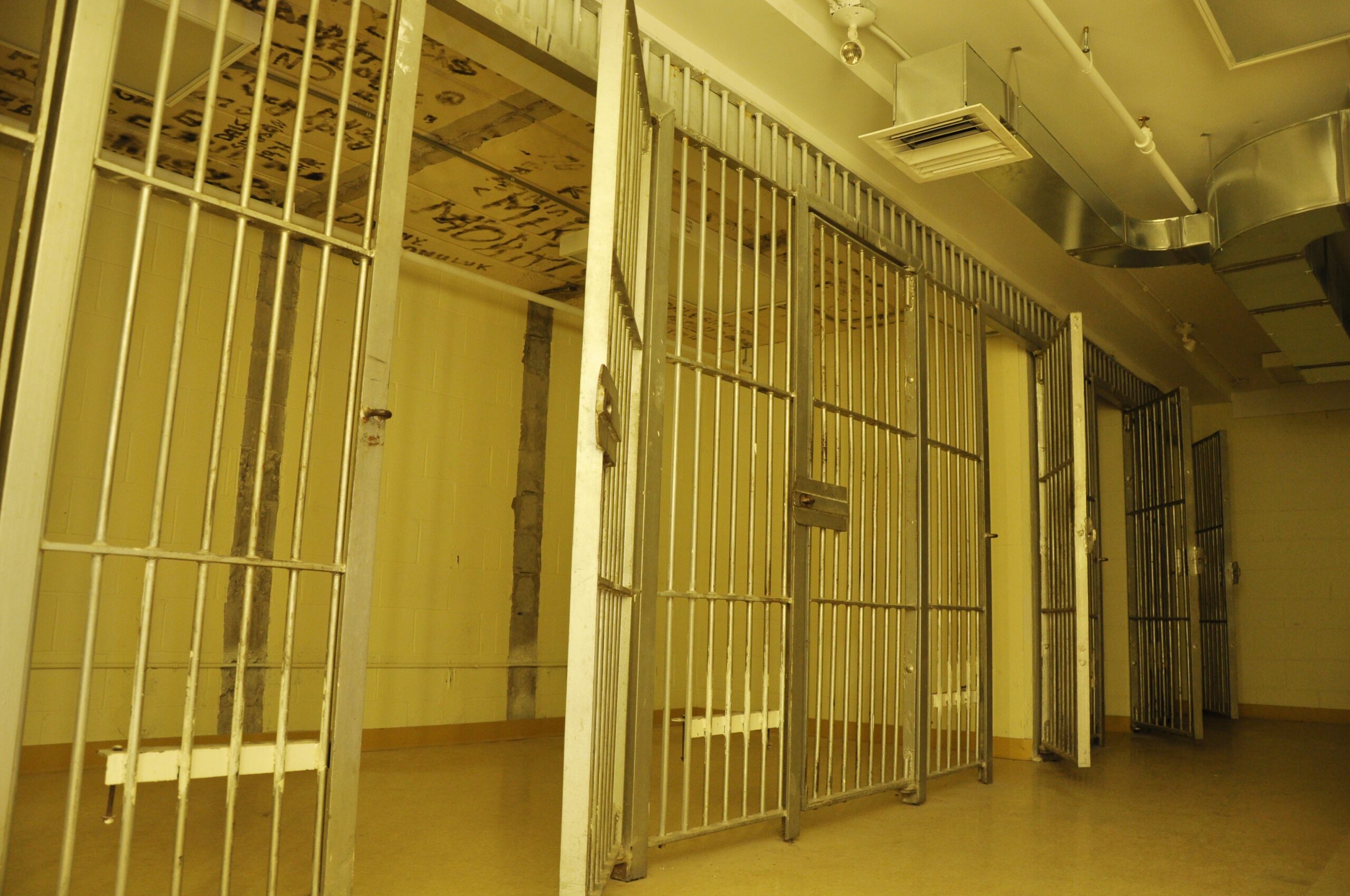
1956
Post office relocates. The building later serves as the Orillia Police Station and courthouse.
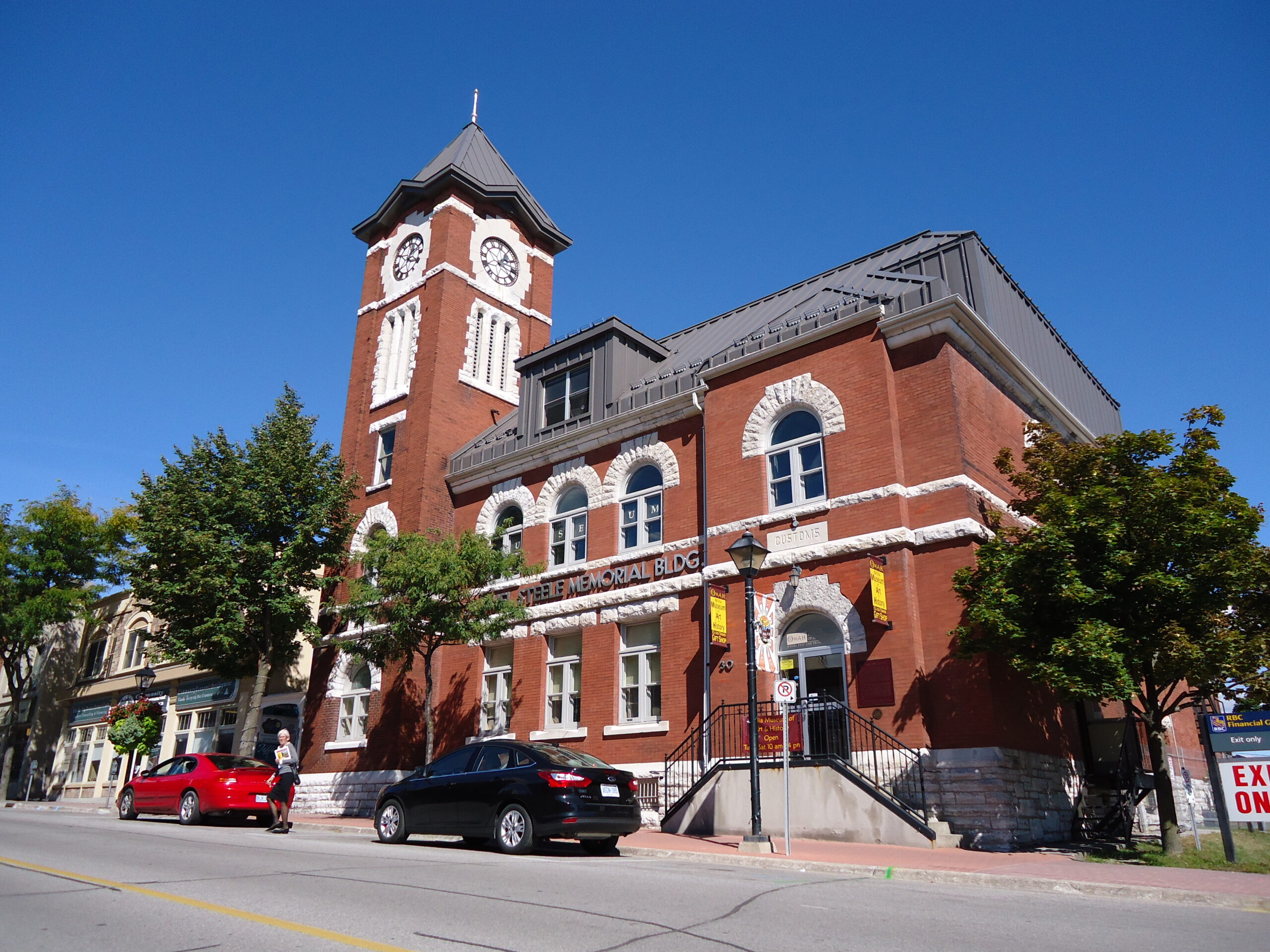
1977
The building ceases operating as a police station and courthouse and begins housing community organizations.
1991
Sir Sam Steele Art Gallery Foundation is incorporated with the vision of establishing a public art gallery.
1993
Community advocates recognize the importance of preserving the building and transforming it into a cultural destination.
1995
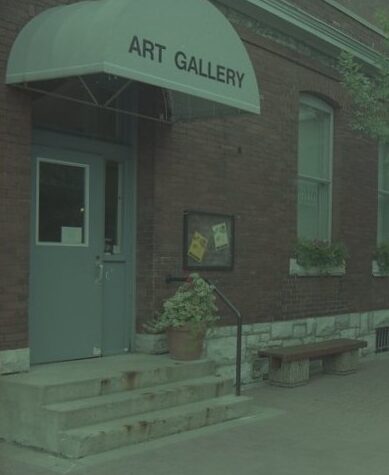
The Sir Sam Steele Art Gallery officially opens. Volunteers transform the original gallery spaces themselves.
1999
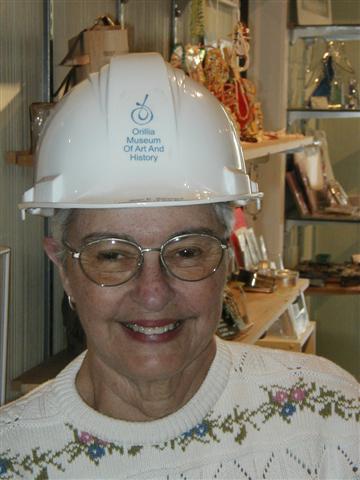
The Orillia Historical Society and the Sir Sam Steele Art Gallery Foundation amalgamate to form OMAH.
A Building in Transition
In 1991, the Sir Sam Steele Art Gallery Foundation was incorporated with the vision of establishing a public art gallery for Orillia and surrounding townships.
When the City of Orillia considered selling the Sir Samuel Steele Memorial Building in 1993, community advocates recognized the importance of preserving the building and transforming it into a cultural destination.
Through determined fundraising efforts and widespread community support, the Foundation commissioned a feasibility study that ultimately recommended preserving the building’s historic exterior while adapting the interior for cultural use.
In 1995, the Sir Sam Steele Art Gallery officially opened under the leadership of its first Curator, Gay Guthrie. Volunteers transformed the original gallery spaces by removing walls, painting, and installing lighting systems themselves, demonstrating the deep investment the community already felt toward the future of arts and culture in Orillia.
The Orillia Museum of Art & History (OMAH) is Created
The Orillia Historical Society and the Sir Sam Steele Art Gallery Foundation amalgamate to form OMAH.
The Creation of OMAH
Recognizing the strength of collaboration, the Orillia Historical Society and the Sir Sam Steele Art Gallery Foundation amalgamated in 1999 to form the Orillia Museum of Art & History (OMAH).
This amalgamation brought together two complementary missions: preserving local history and supporting contemporary artistic expression. Sharing resources allowed the new organization to envision something larger—a fully integrated museum and gallery space that could serve the evolving cultural needs of the community.
A Community Investment in Culture
Following amalgamation, OMAH embarked on an ambitious multi-phase renovation project to transform the Sir Samuel Steele Memorial Building into a fully accessible, multi-level museum and gallery facility.
The more than $3.3 million renovation project was made possible through an extraordinary collaboration between community supporters and public funding partners. Local donors contributed approximately 37.4% of the total project cost, demonstrating strong community investment in OMAH’s future. Additional support was provided through the Government of Canada’s Canada Cultural Spaces Fund (35.8%), the City of Orillia (20.6%), and the Ontario Trillium Foundation (6.2%).
Today, OMAH features:
- FIVE exhibition galleries
- The Dorothy Macdonald Creative Studio
- Dedicated collections storage and research spaces housing over 23,000 objects, including art, archival materials, and photographs
- Community programming areas
- Fully accessible public spaces
As steward of the Sir Samuel Steele Memorial Building, OMAH has overseen significant restoration efforts and leasehold improvements while preserving the heritage character of one of Orillia’s most recognized cultural landmarks.
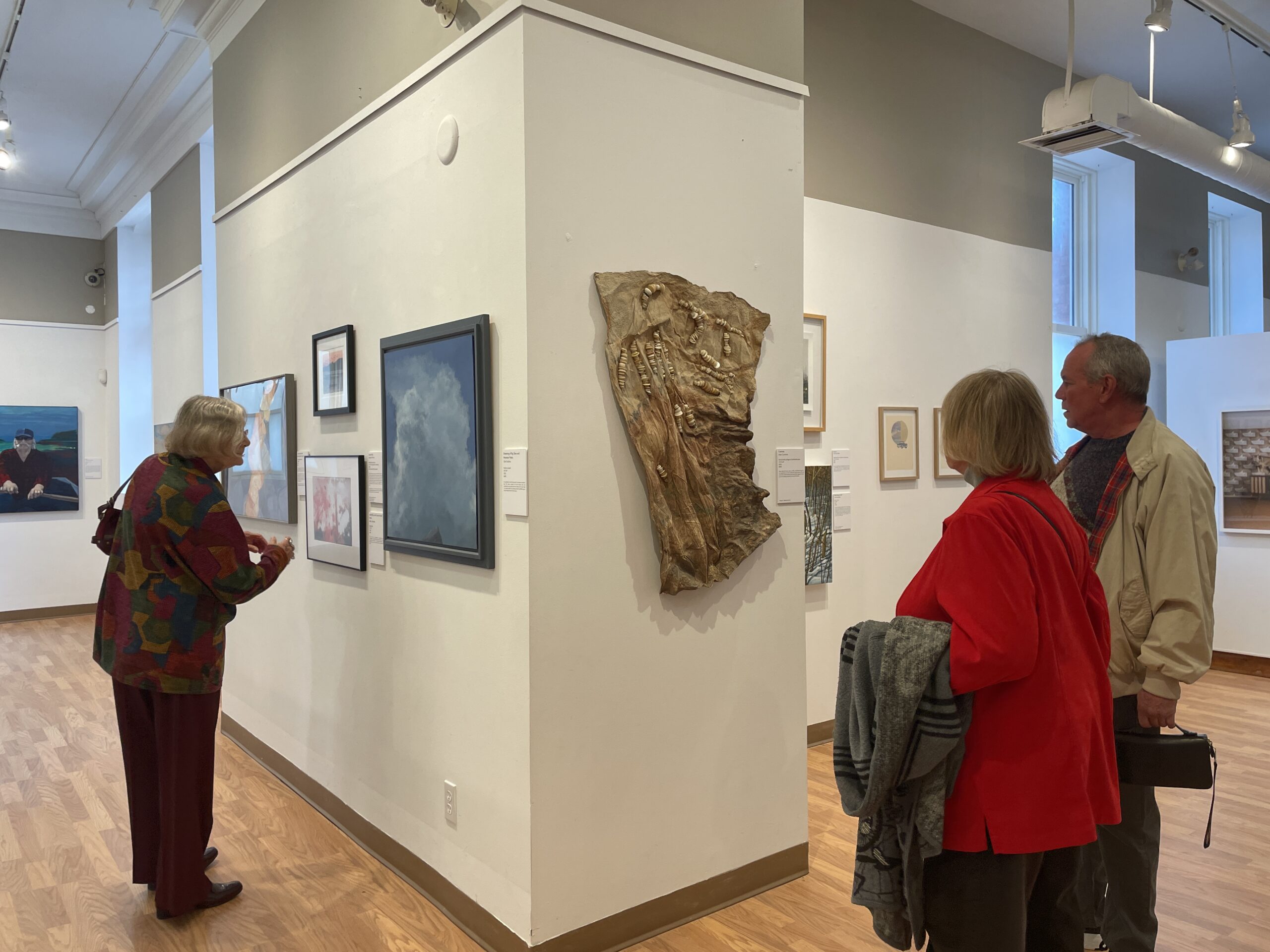
OMAH Today: A Museum for Community Wellbeing
OMAH has evolved into far more than a traditional museum. It is a place where art, history, education, and community intersect.
Through exhibitions, school programs, artist talks, workshops, camps, lectures, outreach initiatives, and collaborative partnerships, OMAH serves thousands of residents and visitors each year. The museum works with multiple school boards, post-secondary institutions including Georgian College and Lakehead University, seniors, youth, families, artists, historians, newcomers, and community organizations.
The museum continues to:
- Preserve and conserve local heritage
- Support contemporary artists and creative practice
- Foster public dialogue through exhibitions and programming
- Provide inclusive and accessible learning experiences
- Create opportunities for community connection and wellbeing
- Serve as a cultural hub in downtown Orillia
Culture as Community Infrastructure
OMAH believes museums are essential civic spaces. They are places where communities see themselves reflected, where stories are shared across generations, and where creativity fosters belonging and dialogue.
As OMAH looks toward the future through its current strategic planning initiatives, the organization remains committed to strengthening community engagement, supporting cultural tourism, preserving local history, and ensuring that arts and culture continue to play a meaningful role in the wellbeing of the region.
The story of OMAH is ultimately a story about what communities can accomplish together—through volunteerism, philanthropy, advocacy, creativity, and a shared commitment to preserving the past while shaping the future.