
How an Orillian Facilitated the American Art Pottery Movement
By Fred Blair
In 1850, at 37 years old, Frederick married Anna Brownrigg in Cincinnati, Ohio. He was employed as a bookkeeper in Michael and Nimrod Tempest’s Hamilton Road Pottery. In 1865, Frederick purchased the company. He employed from 10 to 31 potters in making yellow clay ware, like ceramic fruit jars for the canning industry. His pottery was not always stamped with the company name DALLAS.
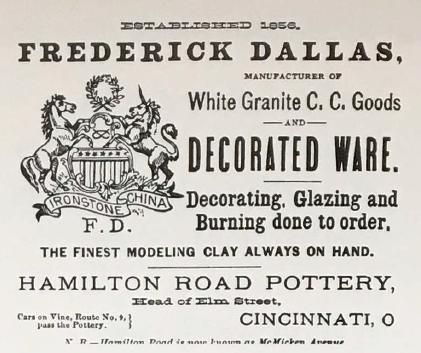
About 1869, Frederick switched production to white clay ware to make finer art pottery. At that time, upper class women were purchasing fired pottery to decorate as a hobby. The advertisement in the image here was directed at those ladies.
In 1876, an exhibition was held in Philadelphia to celebrate the Centennial of the United States. Mrs. McLaughlin and Mrs. Nichols of Cincinnati were inspired by the underglaze art pottery produced in England, France, and Japan and they were both determined to learn the technique.
In 1879, Mary Louise McLaughlin formed the Cincinnati Pottery Club. Maria Longworth Nichols was affronted as she did not receive an invitation to join the club. This created some friction between the two ladies. Mrs. Nichols had rented studio space at Coultry Pottery but had a dispute with them and left. Frederick rented her some of his studio space. Later that year the pottery club moved into Frederick’s Pottery as well. However, his kilns were too hot to fire the finely painted glazed pieces. Mrs. Nichols purchased a kiln to fire over glazes and Mrs. McLaughlin purchased one to fire under glazes. There was artistic rivalry between the two ladies but they shared their special kilns with each other. Both ladies had held the record for the largest vase crafted in the US at about that time.
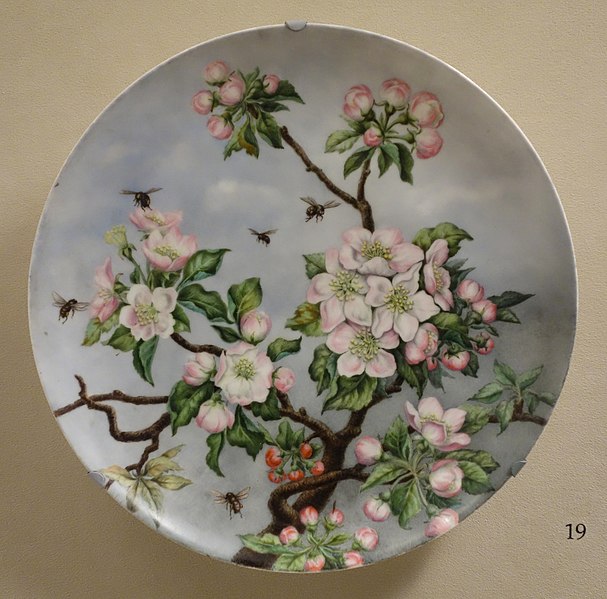
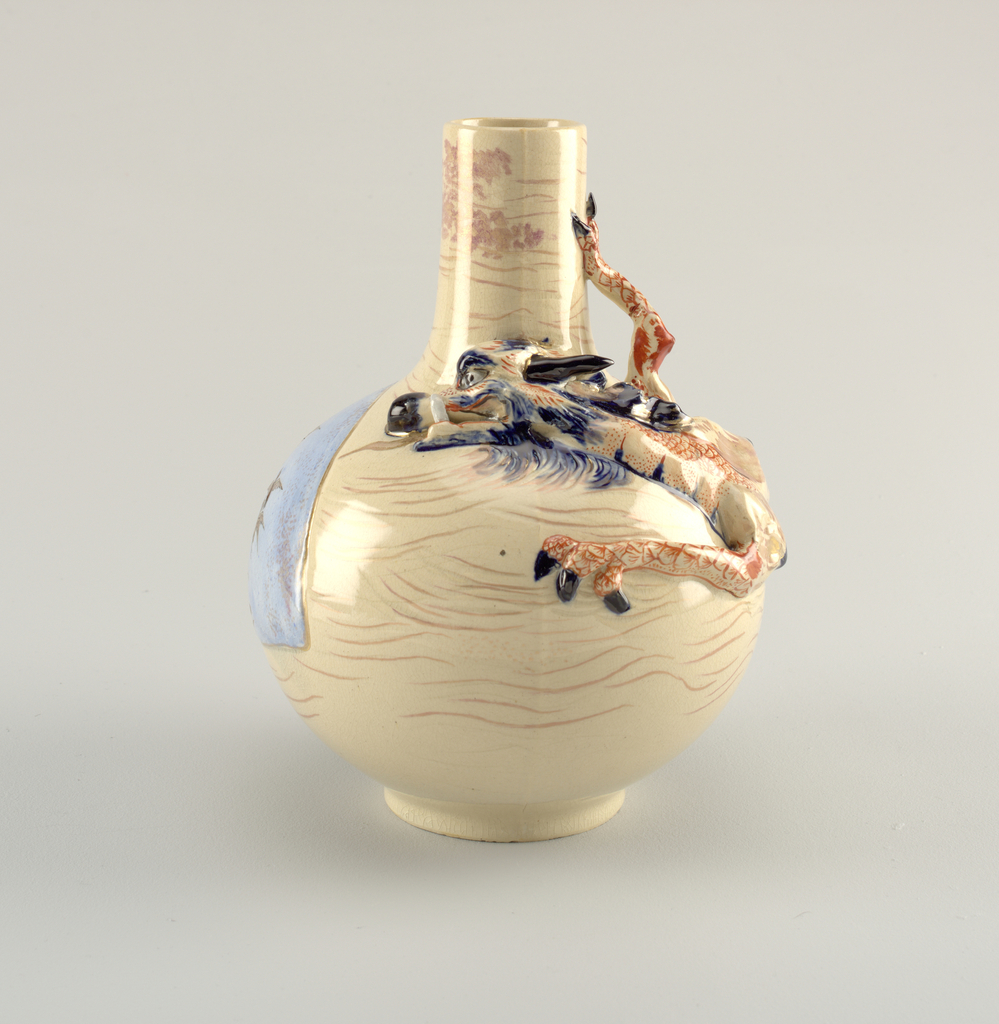
Amanda Merriam’s plaque in the accompanying image was fired in all three types of kilns in the Dallas Pottery in 1882. Mrs. Nichols’ “Dragon Vase”, circa 1879-1880, was fired there as well.
There were over 200 amateur potters in the city and Frederick saw an increasing demand for art pottery in the US. He expanded the size of his pottery production while also investing in clay deposits in several states. The number of potters in his employ increased to over 90 with a similar increase in other staff. His pottery became the largest business in the city. The number of other fine art potteries in the country increased as well and the market for art pottery became saturated in the early 1880s.
On June 9, 1881, Frederick died and his pottery went out of business the following year. Due to the decreased demand for their wares two other large potteries in the city went out of business too. Mrs. Nichols however was undaunted. In 1880, she used family money to purchase a factory and established Rookwood Pottery, which is still in business. If you watch the American Antiques Roadshow, you will have seen some examples of their pottery. Images of these Cincinnati lady’s work can also be found online.
MORE ARTICLES:
Christmas Cards from Franklin Carmichael
The OMAH collection is a treasure trove of artifacts, often generously donated by those who recognize their importance to local history. These gems teach us about our past and individuals who played a part in it. Orillian, Franklin Carmichael, a founding member of the...
Sir Sam Steele: Letters from the Past
Context is everything, particularly when judging historical figures such as Sir Sam Steele. The purpose of the following article is to inform and educate, and not to remark on commemoration or legacy. There are always new discoveries related to our local history....
Where did the Group of Seven Get Their Inspiration?
By: Fred Kallin, OMAH History Committee Not many people realize this, but there is actually a Swedish connection to the Group of Seven.. My Mom used to volunteer at ROM in the 1980s and 1990s, so she got to see a lot of the exhibitions there. One exhibition was...
Mazo de la Roche
History Committee member Trish Crowe-Grande wanted to explore the life of Mazo de la Roche and her Orillia connection and visited the Lake Country Rotary Research Room at OMAH to research more about this Canadian literary icon and Orillia Hall of Fame member. Click on...
History Remembered with Fred Kallin – Raoul Wallenberg: Legendary Hero
With thanks to the efforts of OMAH's History Committee, we are pleased to share our virtual History Speakers Series. Since you can't come to the museum right now, we're bringing the museum to you. In November 2019, Fred Kallin presented the story of legendary hero...
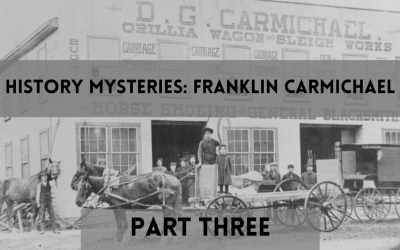
History Mysteries: Franklin Carmichael’s Orillia Part Three
Although Group of Seven artist Franklin Carmichael was born and buried in Orillia, we actually know very little about the time he spent here. That’s why OMAH is producing this three-part series of posts on his life in our city titled History Mystery: Franklin...
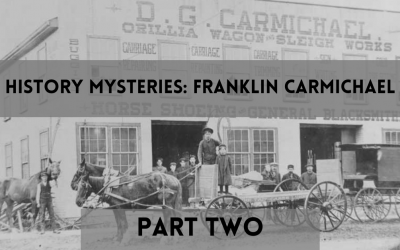
History Mysteries: Franklin Carmichael’s Orillia Part Two
Although Group of Seven artist Franklin Carmichael was born and buried in Orillia, very little is known about the time he spent here. That’s why OMAH is producing this three-part series of posts on his life in our city titled History Mystery: Franklin Carmichael. This...
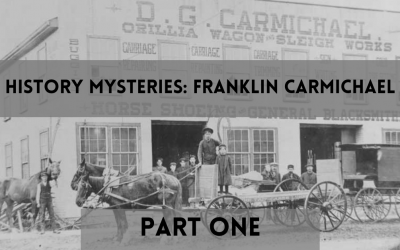
History Mysteries: Franklin Carmichael’s Orillia Part One
Although Group of Seven artist Franklin Carmichael was born and buried in Orillia, very little is known about the time he spent here. That’s why OMAH is producing this three-part series of posts on his life in our city titled History Mystery: Franklin Carmichael. This...