
Ornaments from Christmases Past

By Mary Ann Grant
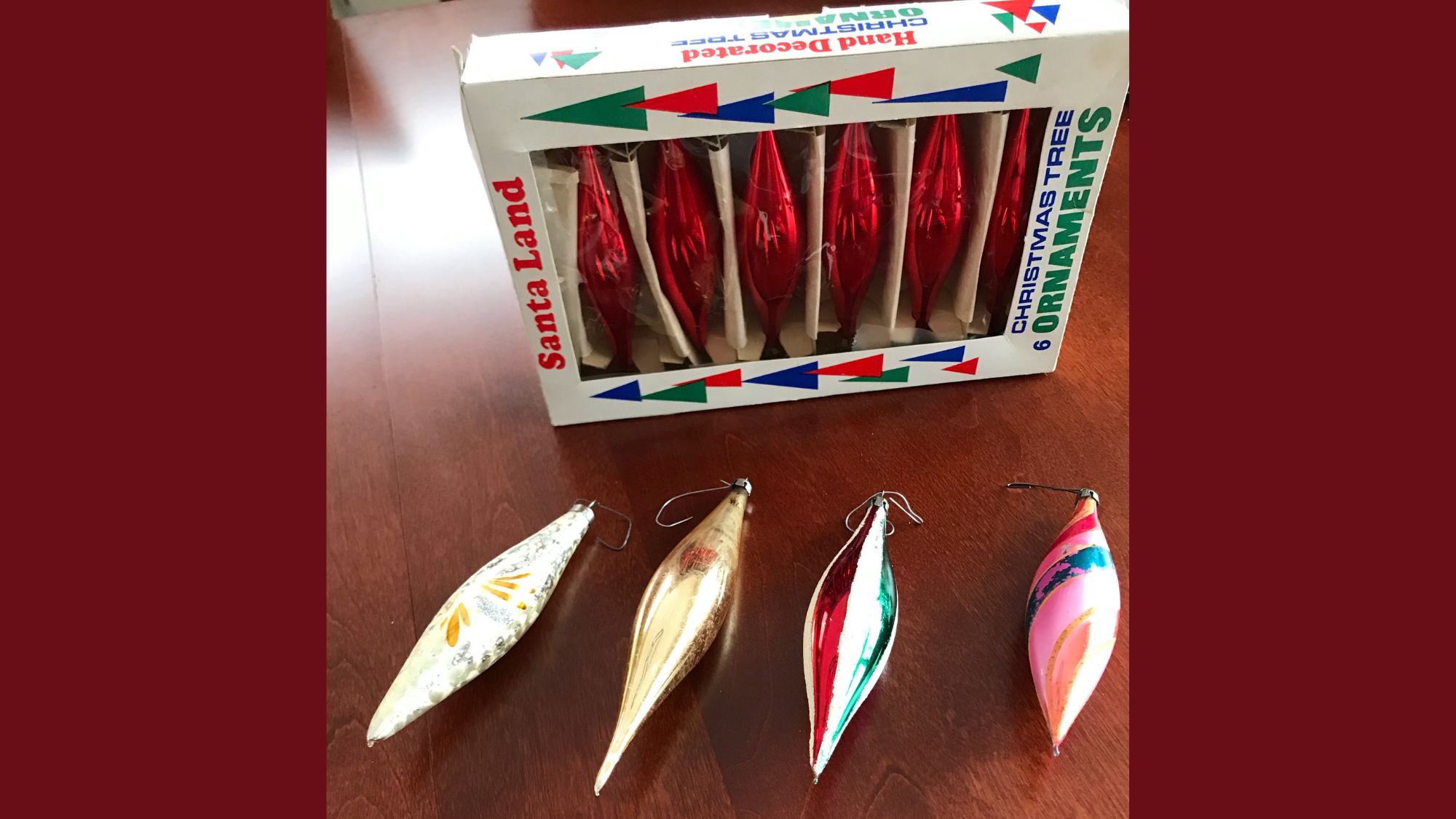
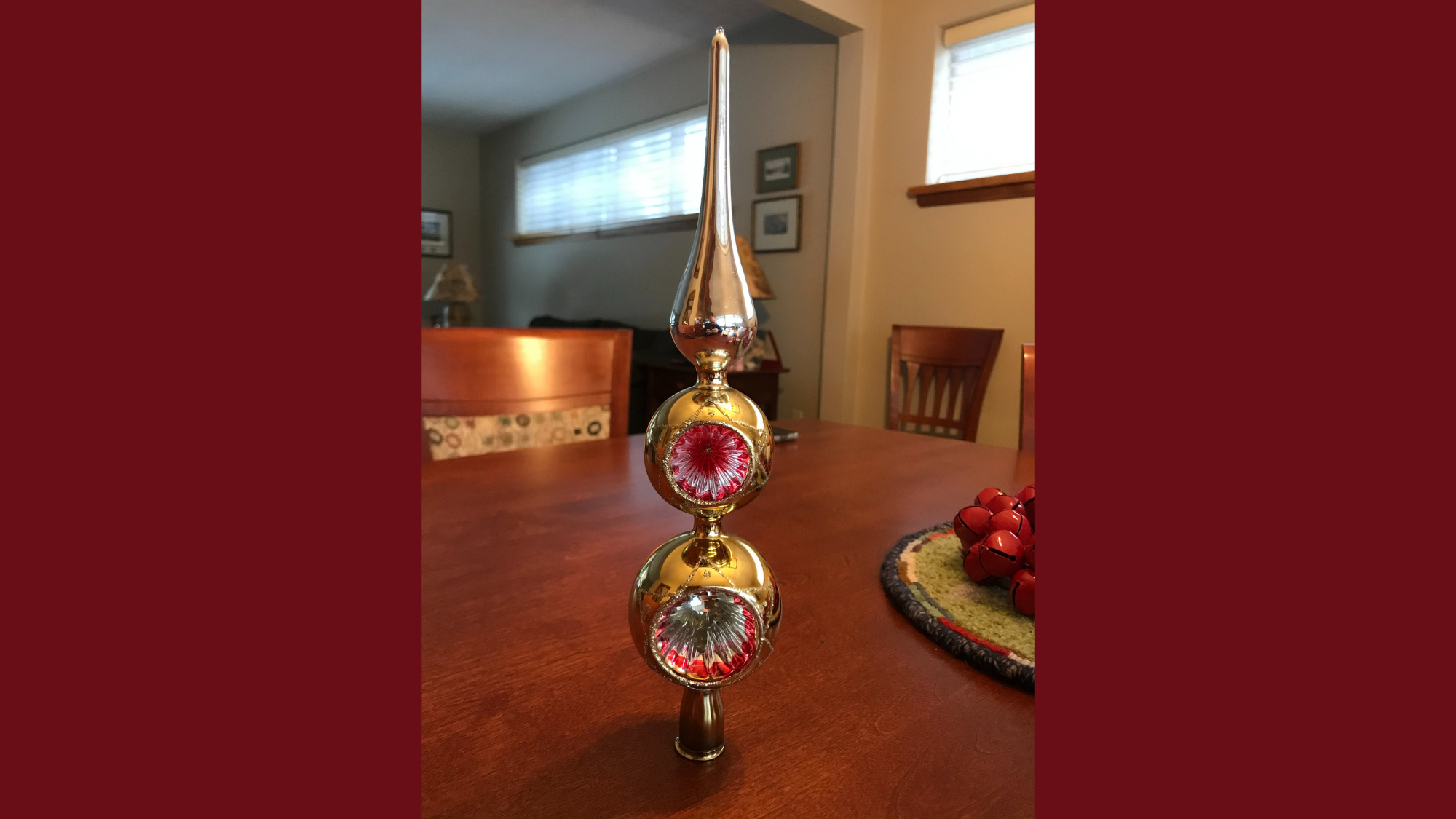
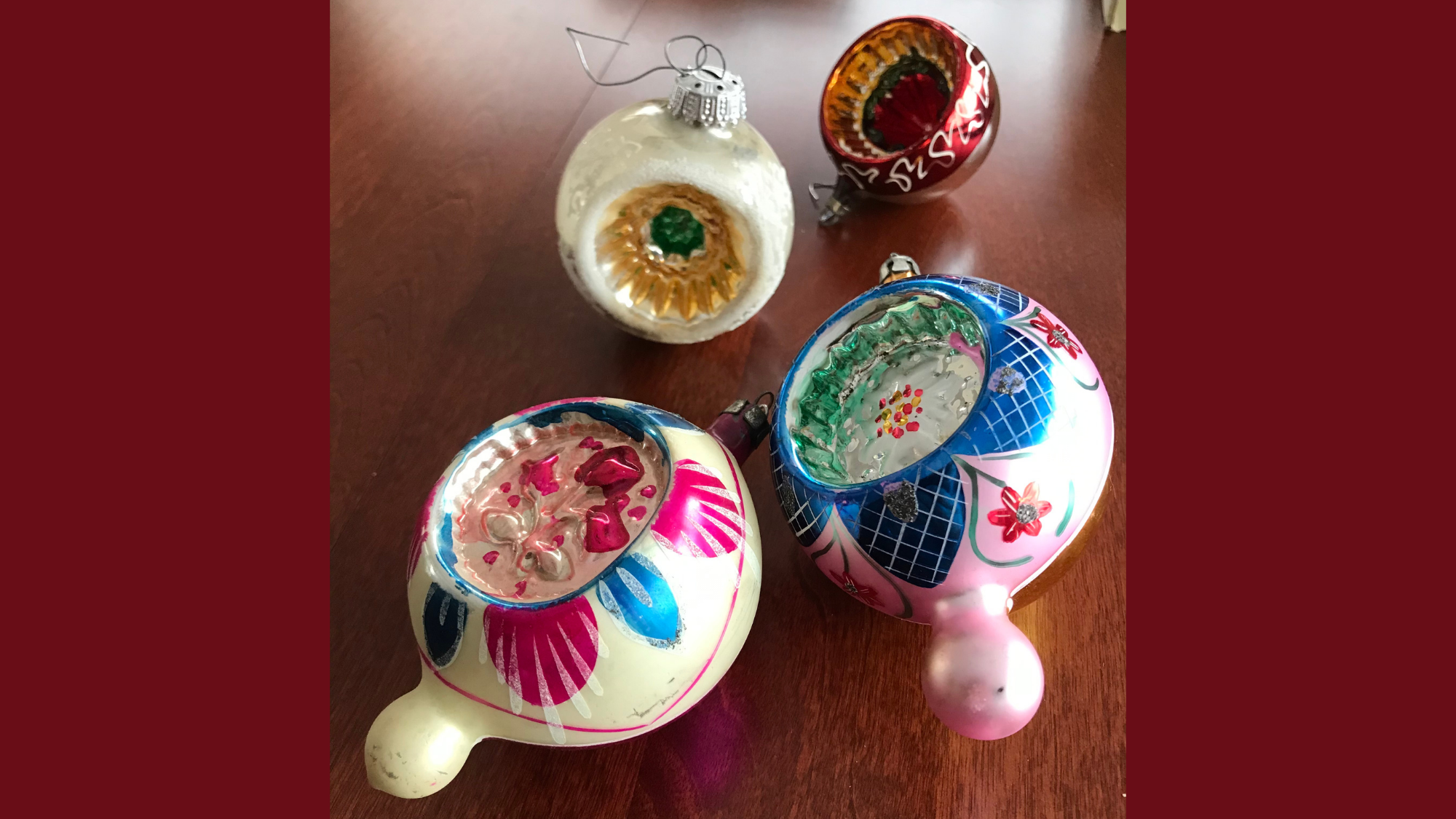
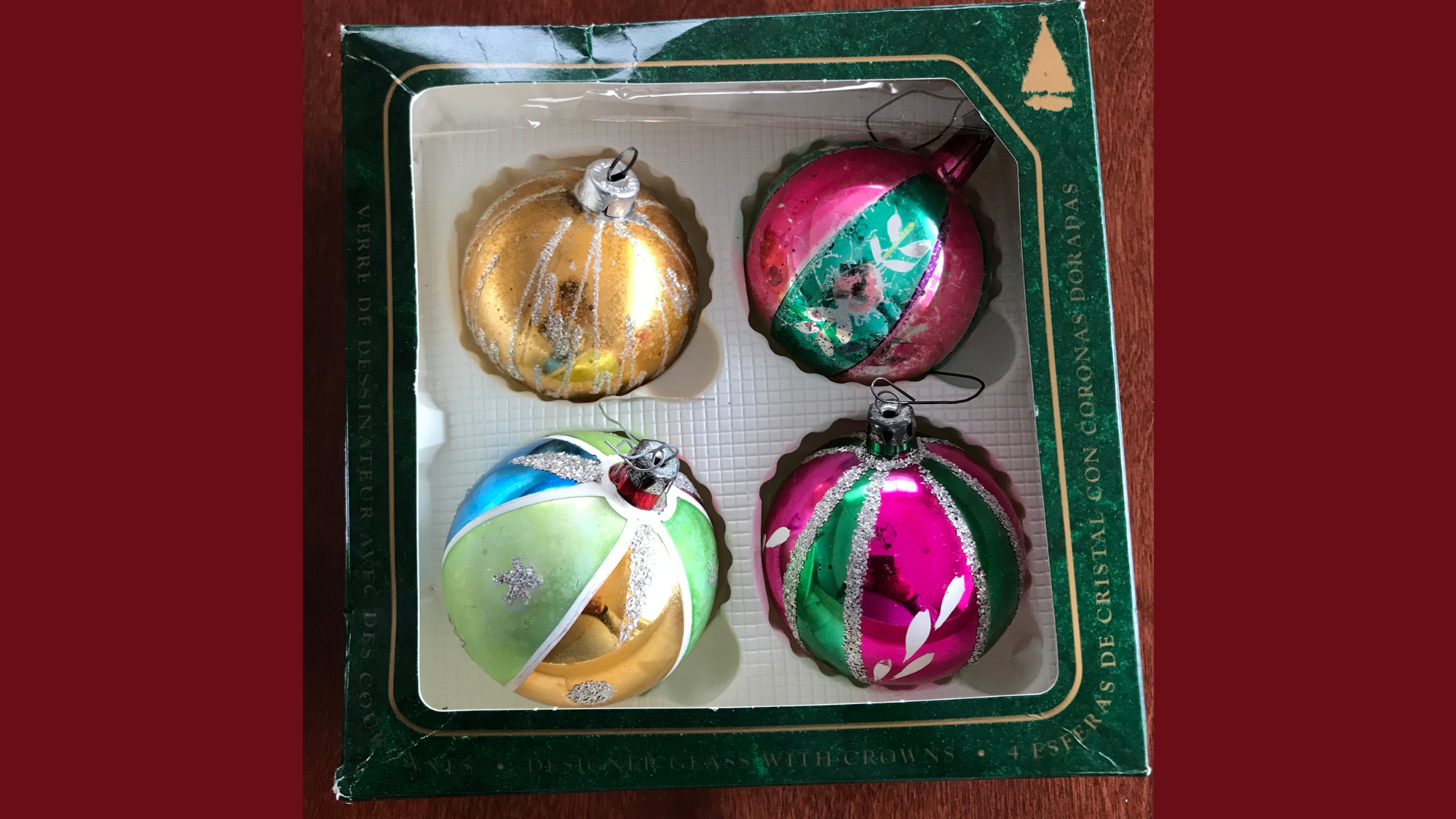
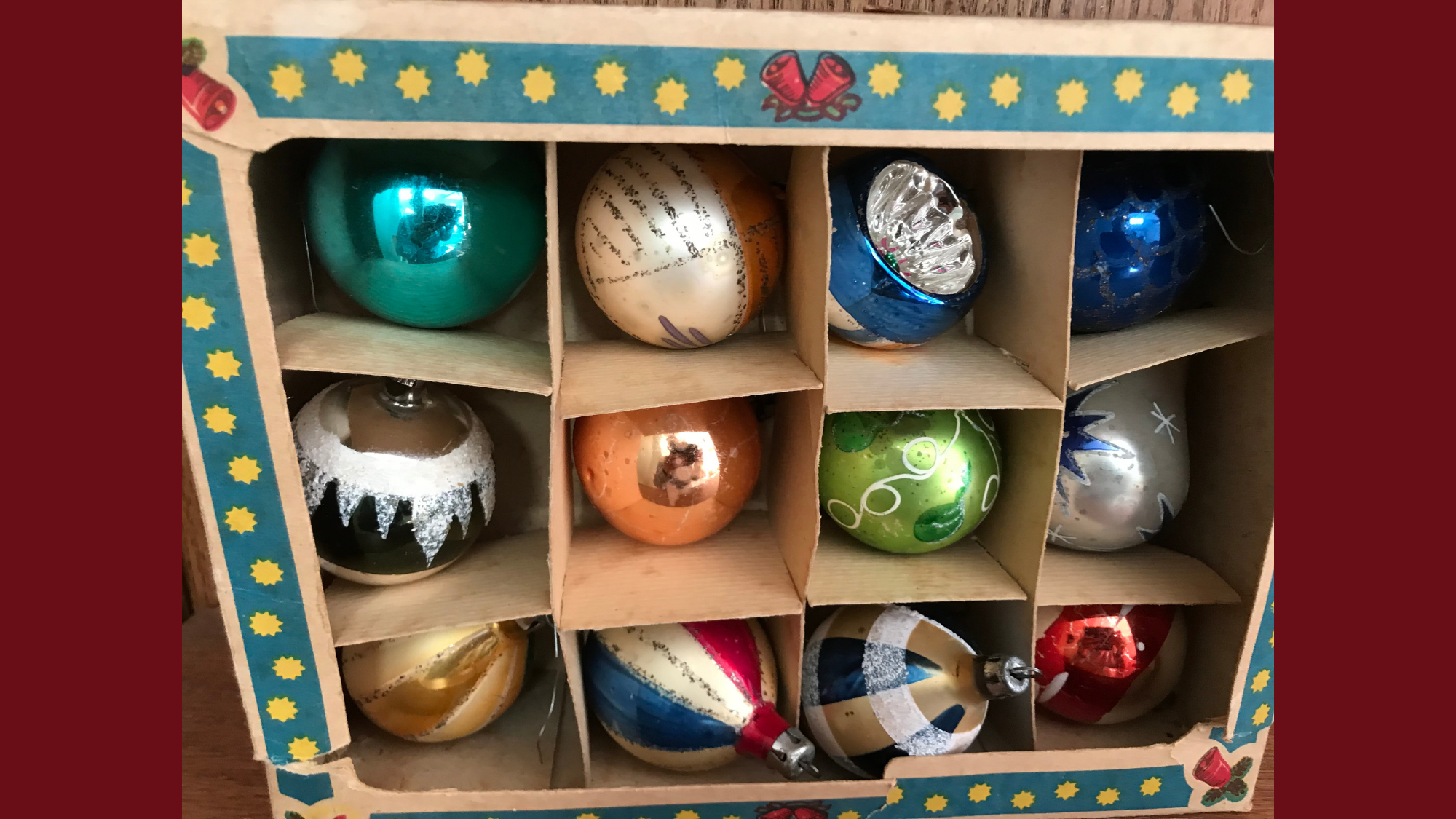
Years ago, this writer became a collector of old-fashioned ornaments that fell out of favour with the advent of plastic. Whether antique, vintage or reproduction, they are precious for their beauty and unique design. They are not just the red and green colours associated with Christmas, but all the colours of the rainbow. These unique ornaments were purchased for pennies at antique stores, yard sales, estate sales and church bazaars in Orillia. They were used by our parents or grandparents, and evoke memories of long-ago days. They tell a story of bygone times.
Their Origin
The tradition of decorating a tree for Christmas originated in Germany. They used fruits and nuts to decorate trees that had shed their leaves to symbolize the spring that was to come. In the early 1600s the trees were brought inside and candles and paper roses were added.
In the 1800s German immigrants brought their tradition to North America and used whatever was available to them to decorate the trees, such as strings of popcorn and cranberries, candles and fruit.
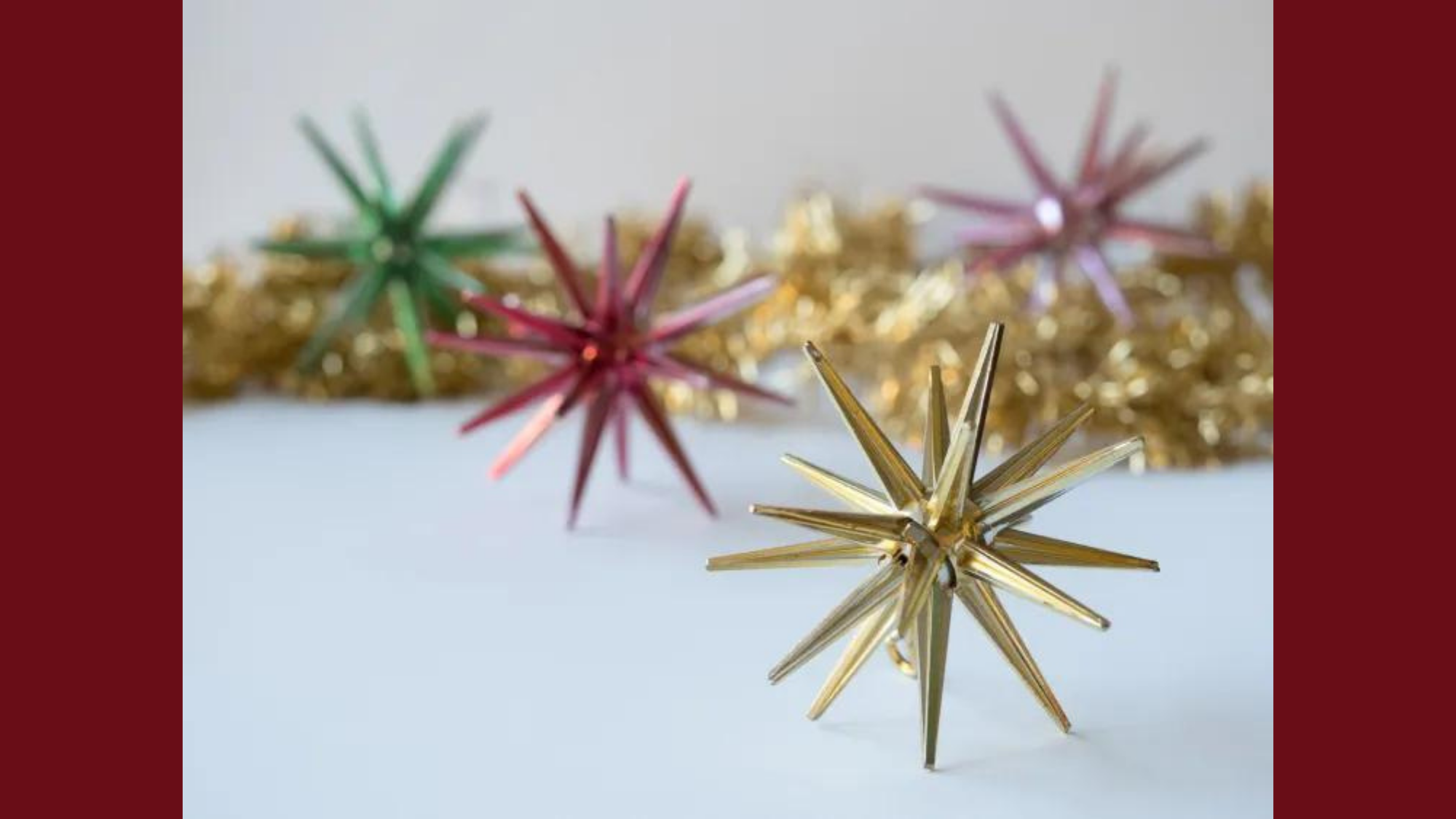
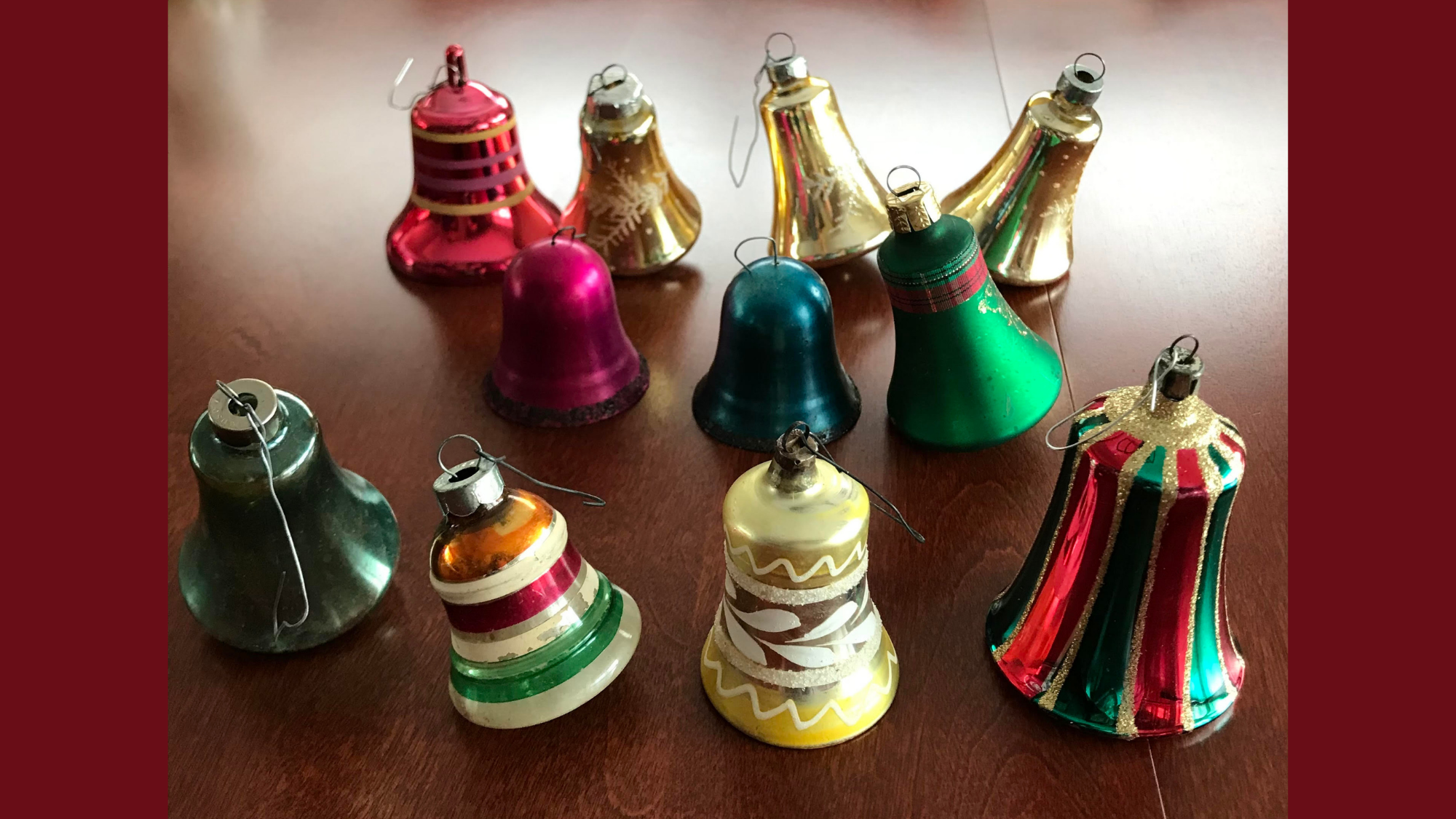
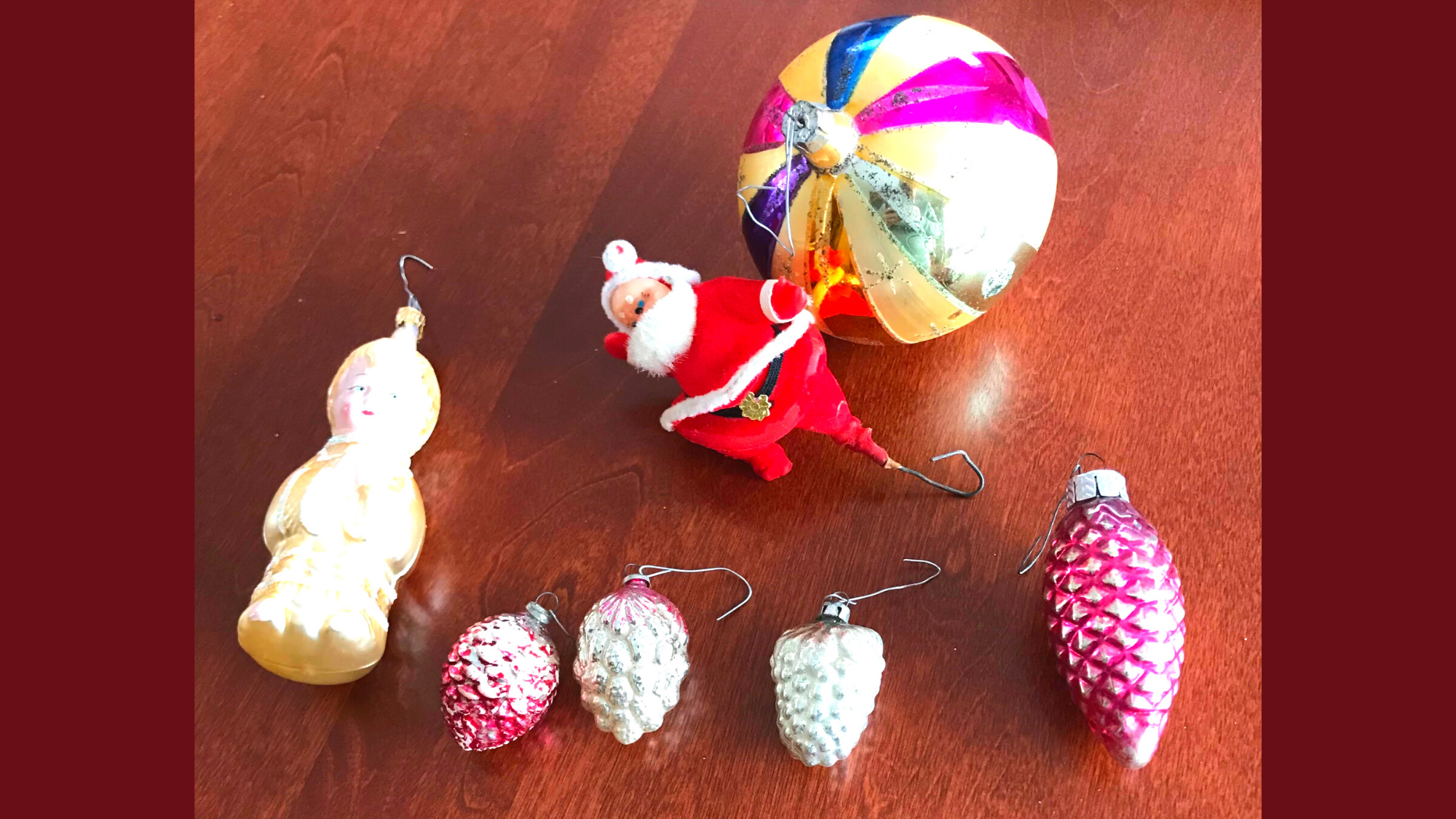
The glass ball ornament came to be and evolved into different shapes, bells, angels, fruit, musical instruments like horns, animals, trees, icicles and lanterns to name a few. Even an ornament modelled on the Russian ‘Sputnik’, the first artificial satellite to be launched into orbit by the Soviets on October 4, 1957, was created.
The origin of the ornaments can usually be found on their cap. This writer’s ornaments originated from the USA, Germany, Poland, Czechoslovakia and other countries. Some are made of metal; others are blown glass and bottle brush.
The invention of Shiny Brite Christmas ornaments in the United States came as a result of World War Two, which made it difficult to import ornaments. American businessman Max Eckart, who had been importing the ornaments from Germany since 1907, made a plan to avoid disruption in his business. He knew that glassblowers from many European countries were employed by Corning Glass and Corning held the patent for the glassblowing machine that was used for the manufacture of lightbulbs. Eckart convinced Corning to make a few alterations to the glassblowing machine to make ornaments. By 1940, Corning Glass was producing 300,000 ornaments per day. Most were sold to Eckart’s Shiny Brite company. Woolworths was a big distributor for the ornaments.
When metal paints and varnishes were in short supply because of the war effort, the balls were banded with slim lines in light shades. The glimmering tops normally made with metal were replaced with hangars made from folded cardboard. After the war the ornaments were again decorated with vibrant colours and metal caps were used again. With the ornaments falling out of favour, Shiny Brite ceased production.
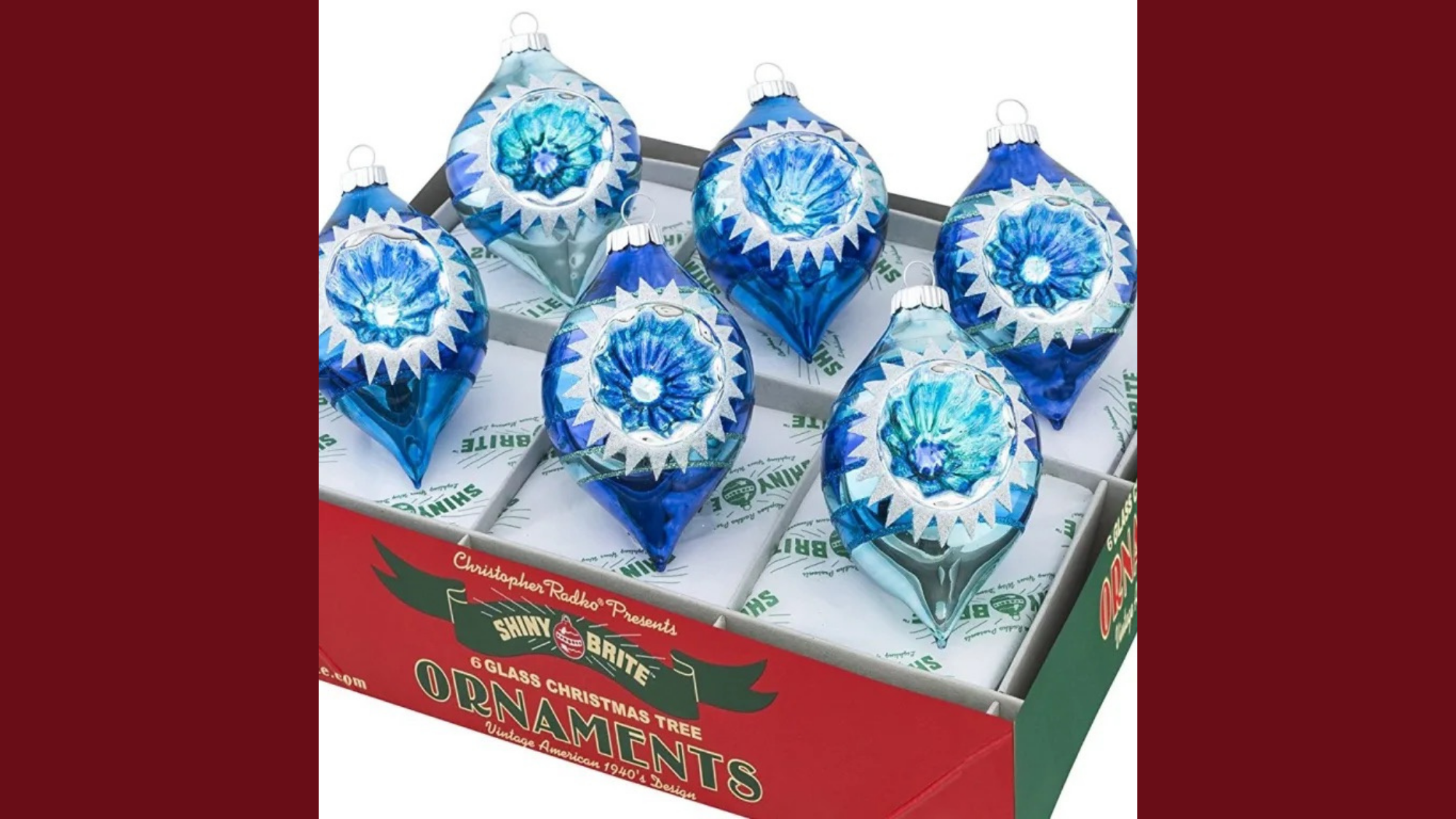
The collection of the old ornaments has made a resurgence. In fact, Christopher Radko purchased the right to use the Shiny Brite name and in 2001 started making authentic looking reproductions of the ornaments.
A Facebook group called The Golden Glow of Christmas Past is a forum for enthusiasts who are passionate about preserving and learning more about our Christmas history. Click on the HERE if you are interested in following this group.
It is wonderful that these pieces of beautifully designed ornaments are being preserved for future generations.
With Thanks to:
- Vintage Christmas Ornaments
- Christmas HQ – Christmas Ornaments, Their Origins, History and Meaning by Kathryn Mars
- Shiny Brite Ornaments: The History of a Holiday Classic
- CBC Vintage Christmas – Ornaments and How to Collect Them
- RUG HOOKING MAGAZINE – Vintage Ornaments Nov/Dec 2020
OMAH Tribute – Dr. Richard (Dick) Johnston
By Mary Ann Grant, OMAH History Committee There are those in our community who make a huge difference and who enhance the lives of others by their actions and contributions; Dr. Richard (Dick) Johnston is one of those people. Dick Johnston has done this through his...
How an Orillian Facilitated the American Art Pottery Movement
By Fred Blair In 1850, at 37 years old, Frederick married Anna Brownrigg in Cincinnati, Ohio. He was employed as a bookkeeper in Michael and Nimrod Tempest’s Hamilton Road Pottery. In 1865, Frederick purchased the company. He employed from 10 to 31 potters in making...

Two Canadian Winter Olympic Sport Pioneers
By Fred Kallin The first Winter Olympics were held in Chamonix, France, at the base of Mont Blanc in 1924. 2022 is very close to the 100th Anniversary of the those first Winter games. In this article we will recognize a couple of the early Canadian pioneers in the...
The History of the Lumbering Community of Martinville in the Copeland Forest
By Mary Ann Grant, OMAH History CommitteeBackground – An important story to tell David Kennedy, President of the Copeland Forest Association asked Mary Ann Grant, OMAH History Committee member, if she would be interested in researching the history of Martinville, a...
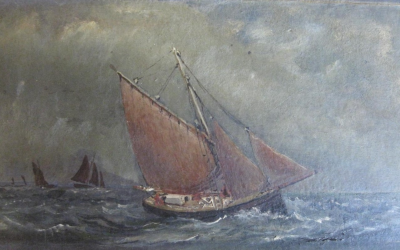
A Tom Thomson Mystery
By Fred Blair If you found the name “Tom Thomson” on the back of a landscape painting, would you think of the Group of Seven? This is a wandering tale about a painting and the possible connections between four landscape painters and Stephen Leacock. In 1888, the...
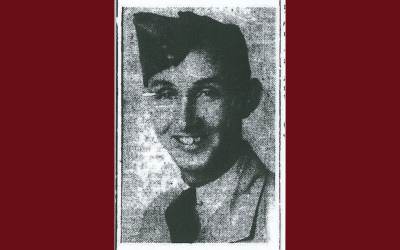
Private Raymond John Gagnon
By Mary Ann Grant The son of Aimee and Emile Gagnon came to Rathburn, Ontario (Monck Road) from Alberta as a boy. The family operated a small strawberry farm on the 12th Concession of Mara Township. A happy-go-lucky lad, Gagnon enjoyed joking with his siblings and...
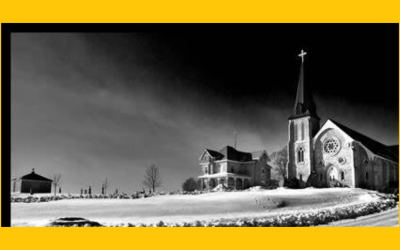
Is St. Columbkille’s Church in Uptergrove haunted?
Trish Crowe-Grande It is that time of year when the leaves change colour, pumpkins and fall mums appear on porches and there is a crisp coolness in the air. If you have taken any walks in your local neighbourhood or drives around town, you may have noticed...
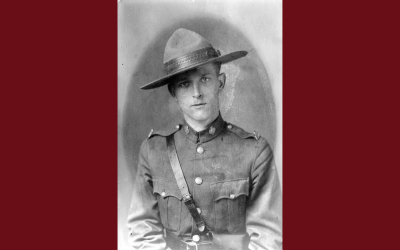
The Man Behind the Badge – an OPP Officer with ties to Orillia
By Chris Johnstone OPP Museum Curator Robert George Beatty was born on July 18, 1904. At the age of 23, he decided to embark on a career in policing after his work as a Provincial Officer under the Ontario Temperance Act came to an end. He joined the OPP as a regular...
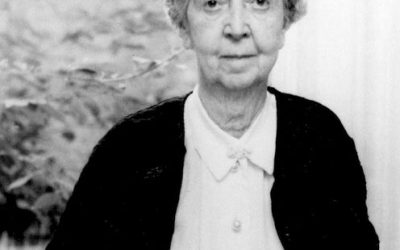
Orillia Hall of Fame Inductee author Marian Keith – Mary Esther (Miller) MacGregor (1874-1961)
Marian Keith was the pen name for Mrs. Esther MacGregor nee Miller. She was born in 1874 In the village of Rugby, Oro Township (now Oro-Medonte), to parents who instilled in her the value of education, a keen interest in learning, a love of good literature and a...
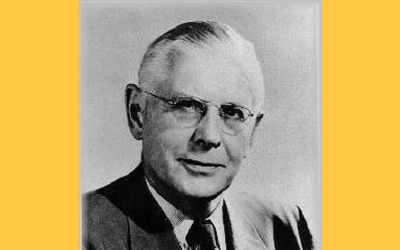
Leslie Frost: Orillia’s First Premier
Premier of Ontario 1949-1961 By John Merritt, Simcoe County Historical Association September 20, 2020 marked the 125th anniversary of the birth of Orillia native and former Ontario premier Leslie Frost. Frost was born in Orillia on September 20, 1895 to William...